
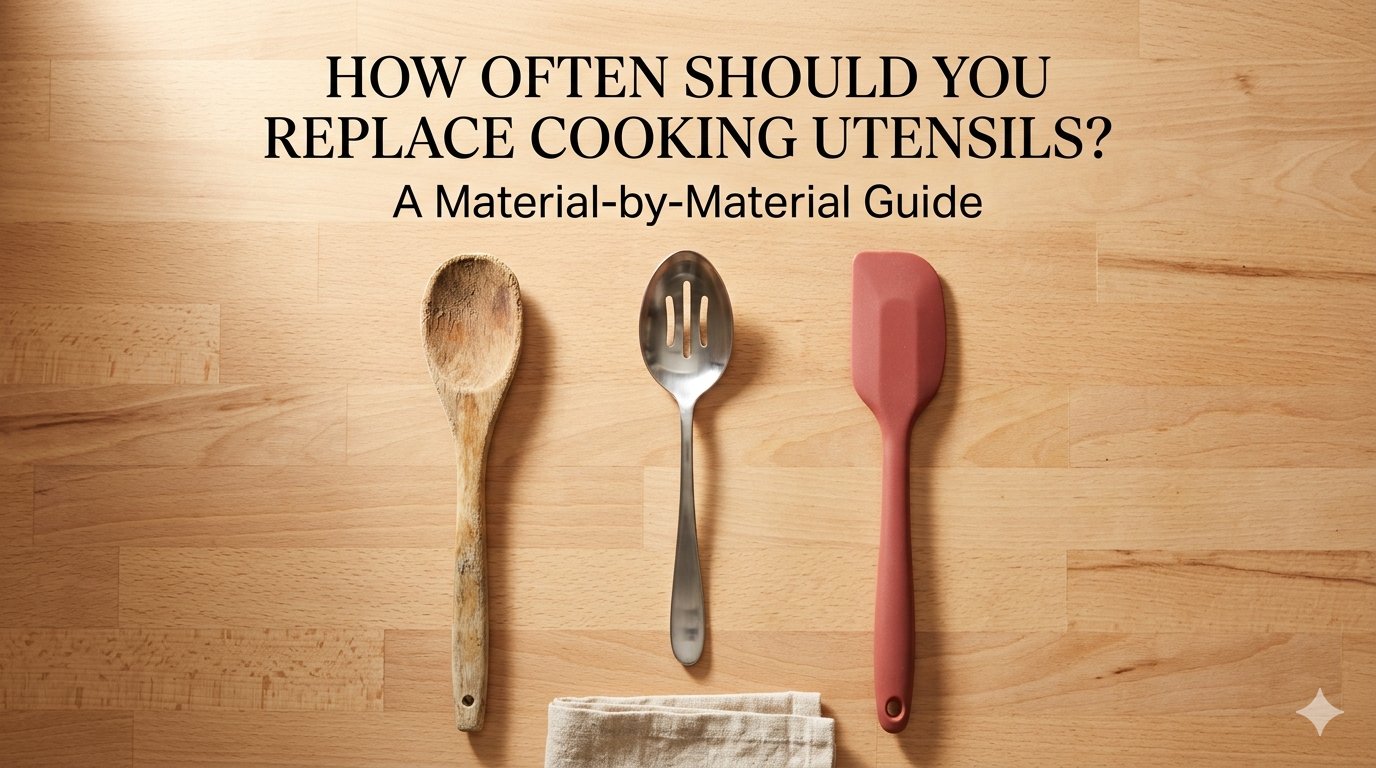
I used a wooden spoon for so long that it had a permanent lean and a smell that survived three washes. I kept thinking it was “probably fine,” but once I finally tossed it and took a hard look at the rest of my kitchen drawers, I realized half my utensils were past their useful life.
Knowing how often you should replace cooking utensils isn’t as simple as following a single timeline. Different materials wear out at completely different rates, and the warning signs look nothing alike.
This article breaks it down by material type, covers the real food safety concerns (not just aesthetics), and gives you a clear framework for deciding what to keep and what to toss.
Why Replacement Timelines Vary So Much by Material
The material your utensil is made from determines everything – how long it lasts, what damages it, and what the failure actually looks like. A stainless steel slotted spoon and a bamboo spatula sitting in the same drawer have almost nothing in common when it comes to lifespan.
The other variable is how hard you cook. Someone making simple weeknight dinners three times a week is putting far less stress on their tools than someone cooking elaborate meals every day. Use that as a calibration point when you read the timelines below.
Wooden and Bamboo Utensils: Replace Every 1 to 5 Years
Wood and bamboo are the utensils most people hold onto too long. They look fine right up until the moment they very much aren’t.
The Real Lifespan
Wooden and bamboo utensils can last for one to two years when used and washed properly, but frequently used items might require replacement every six months.
Higher-quality hardwood utensils – think cherry, maple, or teak – hold up considerably longer than cheaper softwood versions. Softwoods like pine absorb moisture too quickly, develop a rough texture after repeated washing, and often splinter within months of regular use.
Investing a few extra dollars in hardwood buys you significantly more time.
When to Toss It Regardless of Age
Don’t wait for a calendar date. Replace wooden utensils immediately if you see any of these:
- Deep cracks or splits anywhere along the handle or head
- Splinters that snag when you run your finger along the grain
- A persistent sour or musty smell that survives washing
- Visible dark spots or discoloration that could indicate mold
- Any softening or spongy texture at the base of the handle
If a wooden utensil has an unpleasant odor, it needs to be discarded. That smell is not residual garlic. It means bacteria have found a home in the grain.
The One Thing Most Guides Get Wrong About Wooden Utensils
Most people just say “hand wash and oil them.” What they skip is this: the joint where the handle meets the head (on two-piece utensils) is the failure point, not the flat surface.
That joint traps water, loosens over time, and becomes a bacteria harbor that no amount of oiling will fix. When that joint starts feeling wobbly, you’ve reached end-of-life regardless of how the rest of the utensil looks.
Silicone Utensils: Replace Every 3 to 5 Years, or When Damaged
Silicone is one of the most practical utensil materials going. It handles high heat, doesn’t scratch nonstick coatings, and doesn’t absorb flavors or odors the way wood does.
How Long They Actually Last
Quality silicone products, in typical household cooking conditions, aren’t likely to leave harmful materials behind in your food. Silicone can withstand temperatures as high as 400 to 600 degrees Fahrenheit without melting or warping. A well-made silicone spatula with a stainless steel core should give you three to five years of daily use without issue.
The caveat is quality. Cheap silicone utensils – the kind that come in 10-piece sets for $12 – often have thin walls and filler materials that degrade faster. You’ll notice them starting to feel slightly tacky or stiff within a year.
Warning Signs for Silicone
Replace all food utensils, including rubber spatulas, when they become scratched and damaged. If you see any cracking or crumbling on your silicone spatula, take it as a sign to buy a new one.
Any tool that shows signs of damage or deterioration should go straight in the trash – don’t continue using a cracked silicone spatula on the logic that it’s “still mostly fine.”
If you compare wooden vs silicone utensils, silicone will definitely last longer.
Metal Utensils: Potentially Decades, With Exceptions
Good stainless steel kitchen tools are some of the most durable things you own. A well-made whisk or slotted spoon can genuinely last a lifetime if you treat it right.
When Metal Utensils Need Replacing
High-quality metal utensils, especially knives, can last a lifetime when used and cared for correctly. Corrosion, damage, or a noticeable decline in performance are the key indications for replacement.
Look for rust spots that don’t come off with cleaning, bent or warped heads that no longer function properly, or loose rivets on the handle. Surface scratches on stainless don’t indicate a problem – they’re cosmetic. But actual rust means the protective oxide layer has broken down, and it’s time for a replacement.
Metal utensils used on nonstick pans are a different story. Metal spatulas and spoons can gouge nonstick coatings in seconds. Once scratched, the pan loses its nonstick ability and becomes harder to clean.
The metal utensil itself may be fine, but the damage it’s doing to your pan means you need to retire it from nonstick duty and replace it with a silicone or wooden alternative.
Nonstick and Plastic Utensils: Replace Sooner Than You Think
Nonstick Cookware (Related but Critical)
This comes up whenever you’re thinking about utensil replacement because the two are linked. According to Breann Chai, who leads cookware testing at Consumer Reports, if a nonstick pan has any chips or scratches, it should be thrown away. The nonstick coating could be flaking off into food being cooked in the pan.
The food safety concern is real enough that scratched nonstick pans shouldn’t be used at all, regardless of how new they are.
Plastic Utensils
Cheap plastic utensils have the shortest lifespan of anything in your kitchen. Plastic utensils that aren’t labeled heat-resistant can melt or release chemicals when exposed to heat. If your plastic spoon has any warp, discoloration from heat, or visible melting on the edges, toss it immediately.
Cutting Boards: The Most Overlooked Replacement in the Kitchen
Most people think about their spatulas before they think about their cutting boards. That’s backwards – cutting boards have more direct contact with raw meat than almost anything else in your kitchen.
Plastic Cutting Boards
The FDA recommends replacing plastic cutting boards every 2 to 3 years, regardless of appearance, due to microscopic fissures that cleaning can’t reach. Deeply scored boards should be discarded immediately, before that timeline, because those grooves harbor pathogens that soap and water can’t remove effectively.
Wood Cutting Boards
Boards with deep grooves, cracks, or excessive wear should be replaced when they can no longer be cleaned effectively. Damaged surfaces may trap bacteria and compromise food safety. The University of Maine Cooperative Extension notes that a sharp knife actually helps extend cutting board life by creating cleaner, shallower cuts rather than tearing at the surface.
A practical test: if you run your thumbnail across your board and it catches in the grooves, bacteria can do the same thing. That board needs to go.
The Common Misconception About Plastic vs. Wood Boards
There’s a persistent idea that plastic is always more sanitary than wood. The reality is more complicated. Studies have shown that certain hardwoods naturally trap and inhibit bacteria within the wood grain, while plastic boards accumulate bacteria more readily inside worn grooves. The key for both materials is the same: replace when the surface becomes deeply scored, regardless of what it’s made from.
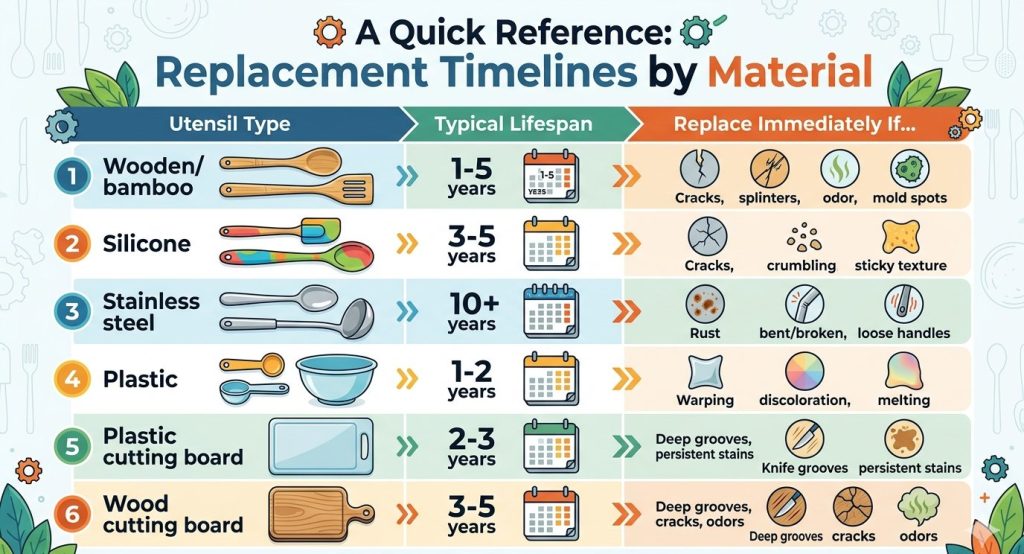
A Quick Reference: Replacement Timelines by Material
| Utensil Type | Typical Lifespan | Replace Immediately If… |
| Wooden/bamboo | 1-5 years | Cracks, splinters, odor, mold spots |
| Silicone | 3-5 years | Cracks, crumbling, sticky texture |
| Stainless steel | 10+ years | Rust, bent/broken, loose handles |
| Plastic | 1-2 years | Warping, discoloration, melting |
| Plastic cutting board | 2-3 years | Deep grooves, persistent stains |
| Wood cutting board | 3-5 years | Deep grooves, cracks, odors |
The Fastest Way to Tell If a Utensil Still Has Life Left
Forget the timeline for a second and use your senses. Run your hand along every surface – anything that catches, splinters, or feels rough is a food trap. Smell it after washing – anything that still smells like last week’s dinner is harboring bacteria. Look for discoloration, warping, or loose connections between parts.
All kitchen utensils that come into direct contact with food or food preparation surfaces should be kept in good condition and replaced at the earliest signs of wear and tear. That’s the only timeline that actually matters.
Practical tip: Do a drawer audit once a year – pull everything out, wash it, and inspect it dry. Problems you miss when utensils are jumbled together become obvious when you look at each one individually.