
The silicone vs wooden cooking utensils debate is more than just aesthetics. It directly affects how you cook, how long your tools last, and even how safe your food prep is.
Both materials are incredibly popular, and for good reason. Silicone brings modern convenience and heat resistance, while wood offers timeless reliability and natural charm.
In this guide, I’ll break down everything including pros, cons, safety, durability, and real-world use, so that you can confidently decide what belongs in your kitchen.
Disclosure: This post may contain affiliate links. If you buy through these links, I may earn a small commission at no extra cost to you. As an Amazon Associate, I earn from qualifying purchases.
Silicone Cooking Utensils: The Modern Kitchen Workhorse
Advantages of Silicone Utensils
Silicone utensils have become a staple in modern kitchens, especially if you use non-stick cookware.
- High heat resistance: Quality silicone can handle up to 500°F (260°C), making it perfect for sautéing and stirring hot sauces.
- Non-scratch: Ideal for non-stick pans=you won’t ruin that coating.
- Flexible design: Great for scraping bowls clean (you’ll waste less batter, trust me).
- Non-porous & hygienic: Doesn’t absorb odors, stains, or bacteria easily.
- Dishwasher safe: Huge win for convenience.
- Variety of designs: From spatulas to whisks in every color imaginable.
👉 A lot of home bakers (myself included) rely on silicone spatulas for getting every last bit out of a mixing bowl.
Disadvantages of Silicone Utensils
It’s not all perfect.
- Less rigid: Not ideal for heavy mixing or thick doughs.
- Quality matters: Cheap silicone may contain fillers or leach chemicals=always go for food-grade.
- Can retain grease: Sometimes feels oily even after washing.
- Price: High-quality silicone tools cost more upfront.
👉 According to guidelines referenced by the U.S. Food and Drug Administration, food-grade silicone is generally safe when used within recommended temperature limits; but low-quality products are where problems arise.
Best Uses for Silicone Utensils
- Non-stick cookware
- Baking (spatulas, brushes, whisks)
- Delicate sauces and eggs
- High-heat sautéing
- Scraping bowls clean
Wooden Cooking Utensils: Timeless Charm and Practicality
Advantages of Wooden Utensils
Wooden utensils have been around forever and they still hold up.
- Gentle on cookware: Safe for everything, including cast iron.
- Natural feel: Comfortable to hold, doesn’t heat up.
- Durable: With care, they last years.
- Eco-friendly: Biodegradable and renewable.
- Non-reactive: Won’t mess with acidic foods like tomatoes.
👉 Many chefs still prefer wood for traditional cooking.
Disadvantages of Wooden Utensils
Here’s where you need to be careful:
- Porous material: Can absorb moisture, odors, and bacteria.
- Not dishwasher safe
- Can crack or splinter
- Needs maintenance: Regular oiling required
- Can burn or char over high heat
👉 The United States Department of Agriculture notes that porous materials like wood can harbor bacteria if not properly cleaned and dried.
Best Uses for Wooden Utensils
- Stirring soups and sauces
- Cooking in cast iron or stainless steel
- Mixing dough
- Everyday cooking
- Serving food
Head-to-Head Comparison: Silicone vs. Wooden Utensils on Key Factors
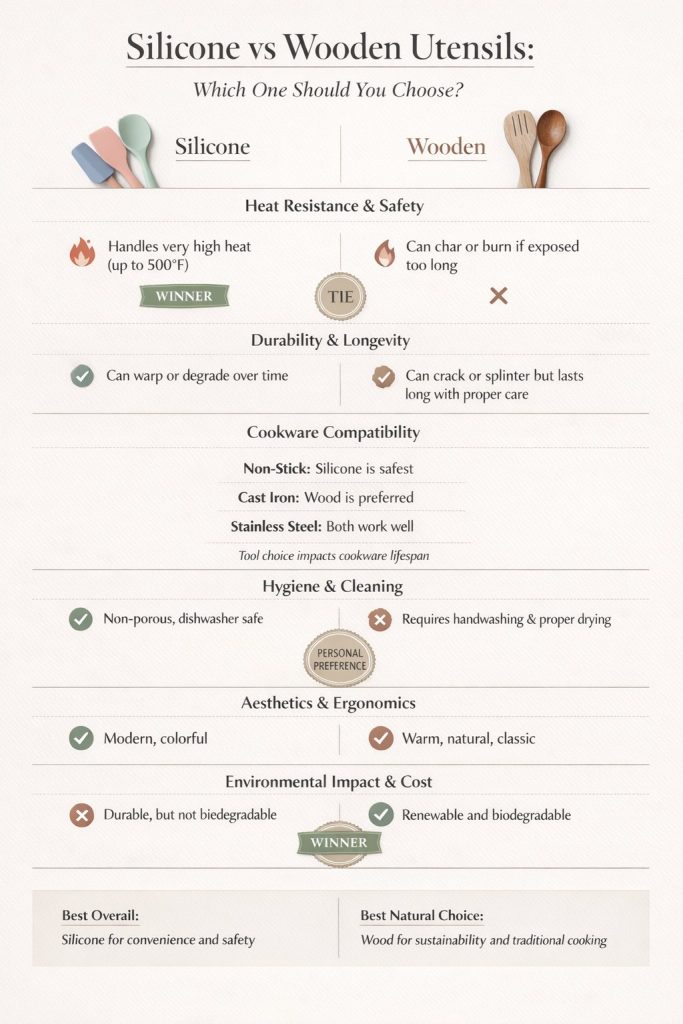
Heat Resistance and Safety
- Silicone: Handles very high heat (up to ~500°F)
- Wood: Can char or burn if exposed too long
👉 Winner: Silicone
Durability and Longevity
- Silicone: Can warp or degrade over time (especially cheap ones)
- Wood: Can crack or splinter but lasts long with care
👉 Tie: it depends on quality and maintenance.
Cookware Compatibility
- Non-stick: Silicone is safest
- Cast iron: Wood is preferred
- Stainless steel: Both work great
👉 If you’ve read my guide on choosing cookware tools, you’ll know this matters a lot for protecting your pans.
Hygiene and Cleaning
- Silicone: Non-porous, dishwasher safe
- Wood: Needs handwashing and proper drying
👉 Winner: Silicone
Aesthetics and Ergonomics
- Silicone: Modern, colorful
- Wood: Warm, natural, classic
👉 Purely personal preference.
Environmental Impact and Cost
- Wood: Renewable, biodegradable
- Silicone: Long-lasting but not biodegradable
👉 Winner: Wood (eco-wise)
Making Your Choice: Which Utensil Set is Right for Your Kitchen?
Consider Your Cookware Collection
- Mostly non-stick? → Go silicone
- Love cast iron or stainless steel? → Wood shines here
Evaluate Your Cooking Style
- High heat, fast cooking → Silicone
- Slow cooking, stirring → Wood
👉 As Gordon Ramsay often emphasizes in cooking demonstrations, the right tool depends on the task; precision tools (like silicone spatulas) for delicate work, sturdy ones (like wooden spoons) for heavy dishes.
Budget and Investment
- Silicone: Higher upfront, less maintenance
- Wood: Cheaper, but requires upkeep
Personal Preference
Ask yourself:
- Do you want convenience? → Silicone
- Do you prefer natural tools? → Wood
Extending the Life of Your Utensils: Care and Maintenance Tips
Caring for Silicone Utensils
- Use dishwasher or warm soapy water
- Avoid abrasive scrubbers
- Buy 100% food-grade silicone (BPA-free)
- Store flat to avoid bending
Caring for Wooden Utensils
- Hand wash immediately after use
- Dry thoroughly (this is crucial)
- Oil regularly (mineral oil or beeswax)
- Never soak or use dishwasher
- Lightly sand if splinters appear
👉 Quick tip: If your wooden spoon smells, rub it with lemon and salt; it works surprisingly well.
Buyer’s Guide: What to Look For
For Silicone Utensils
- 100% food-grade silicone
- BPA-free certification
- Heat resistance up to 500°F
- Solid core (for durability)
For Wooden Utensils
- Hardwood options (beech, bamboo, maple)
- Smooth finish (no rough grain)
- One-piece construction (no glued parts)
👉 A common mistake? Buying super cheap sets. They rarely last and you’ll end up replacing them anyway.
The Verdict: A Balanced Approach to Kitchen Tools
Here’s the honest truth: there’s no single winner in the silicone vs wooden cooking utensils debate.
- Silicone is perfect for modern kitchens, non-stick cookware, and high-heat tasks.
- Wood is unbeatable for comfort, durability, and traditional cooking.
The best kitchens? They use both.
If you want my frank recommendation:
- Keep silicone spatulas and turners for precision work
- Use wooden spoons for everyday cooking
That combo covers almost everything without overthinking it.
Read my article on the best cooking utensils to find out the best ones that make cooking easier.
FAQ
Are silicone utensils safe for high heat cooking?
Yes, high-quality food-grade silicone is safe up to around 500°F.
How often should you replace wooden spoons?
Only when they crack, splinter, or develop deep stains or odors.
Can silicone utensils scratch non-stick pans?
No, they are designed to be non-scratch.
What type of wood is best for cooking utensils?
Hardwoods like beech, maple, and bamboo are best.
Is it safe to put wooden utensils in the dishwasher?
No, it can cause cracking and warping.
Are wooden spoons hygienic?
Yes, if properly cleaned and dried. Poor maintenance is where issues happen.
Can you use silicone utensils on cast iron?
Yes, but wooden utensils are often preferred for better control and durability.
Which type of utensil lasts longer?
Both can last years; silicone resists wear, while wood lasts with proper care.