
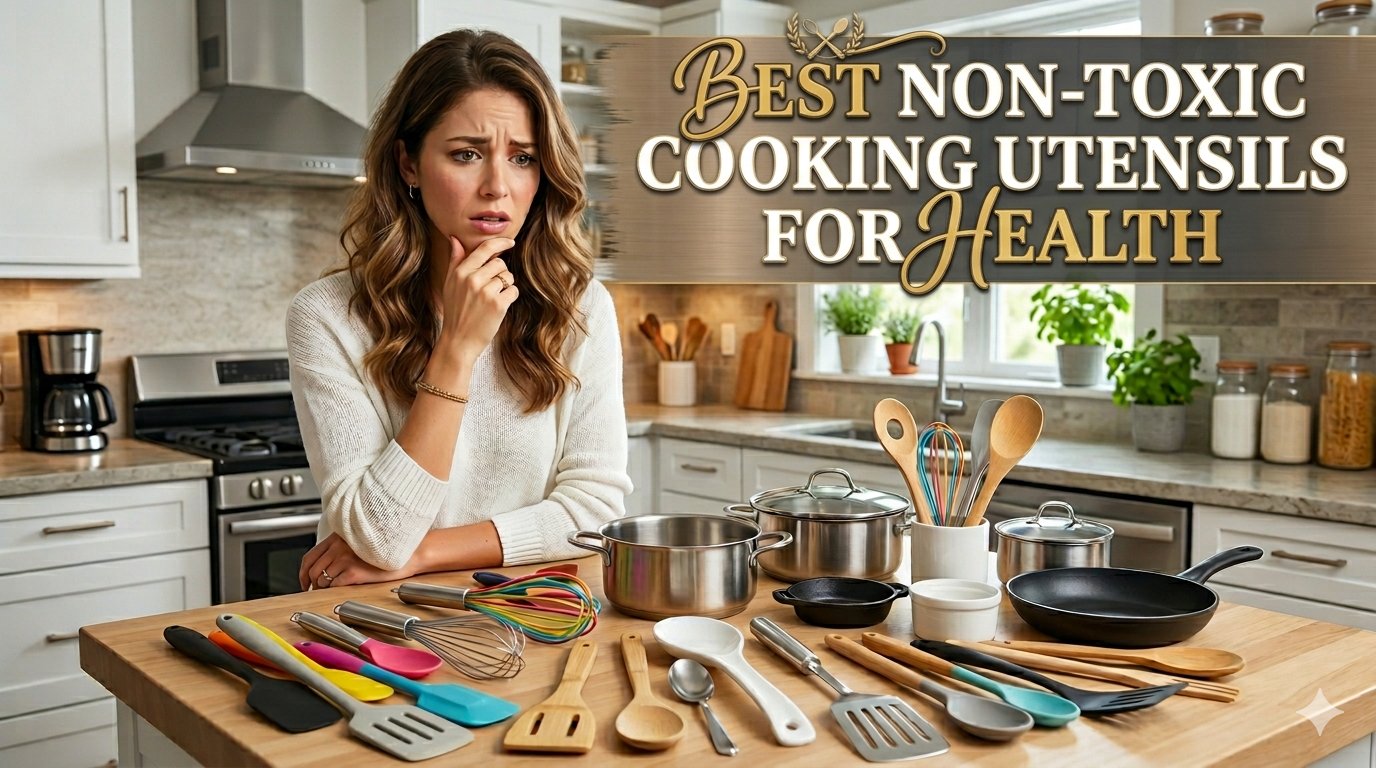
I used to think all kitchen utensils were basically the same. A spoon is a spoon, right?
Then I started noticing weird smells from cheap silicone spatulas and tiny scratches in my pans from low-quality tools. That’s when I realized that what you cook with matters just as much as what you cook.
If you’re searching for the best non toxic cooking utensils for health, you’re already on the right track. The goal isn’t just avoiding chemicals. It’s choosing tools that are safe, durable, and actually perform better in real cooking.
Disclosure: This post may contain affiliate links. If you buy through these links, I may earn a small commission at no extra cost to you. As an Amazon Associate, I earn from qualifying purchases.
Why Your Cooking Utensils Might Be Leaching Toxins
Most people don’t realize this, but cheap utensils can break down under heat and release unwanted substances into your food.
The Dangers of Low-Quality Silicone
Not all silicone is created equal.
Low-grade silicone often contains fillers. When exposed to heat:
- It can release odors
- It may degrade faster
- It can leach unwanted compounds
👉 Are silicone cooking utensils really non-toxic?
Yes, but only if they’re high-quality, food-grade (preferably LFGB-certified or platinum-cured). Cheap silicone? That’s where problems start.
Plastic and Microplastics in Your Food
Plastic utensils are the biggest concern.
When exposed to high temperatures:
- Chemical bonds weaken
- Microplastics can break off
- Additives like BPA or phthalates may leach into food
Some of these are known endocrine disruptors, which can interfere with hormones over time.
That’s why switching to safer materials isn’t just a trend—it’s a long-term health decision.
The Safest Materials for Non-Toxic Cooking
If you want to avoid toxins completely, focus on these materials.
Solid Hardwood (Acacia, Olive, Beech)
This is one of my personal favorites.
High-quality wood utensils are:
- Naturally non-toxic and chemical-free
- Gentle on cookware
- Naturally antimicrobial when properly maintained
👉 Do wooden spoons harbor bacteria?
Not really when cared for properly. Wood actually resists bacterial growth better than plastic because it doesn’t trap moisture the same way.
18/8 Stainless Steel
This is what you’ll see in professional kitchens.
- Extremely durable
- Heat-resistant
- Doesn’t react with food
👉 What is the safest material for cooking utensils?
If you want zero chemical concerns, stainless steel is one of the safest options available.
Just be careful using it on non-stick cookware as it can scratch.
Platinum-Cured Silicone
This is the “safe version” of silicone.
- No fillers
- Higher heat resistance
- More stable structure
👉 How do I know if my silicone utensils are food grade?
Look for:
- LFGB certification (stricter European standard)
- FDA-approved labeling
- No strong chemical smell
Top 5 Best Non-Toxic Cooking Utensil Sets for 2026
1. All-Clad Stainless Steel Kitchen Utensil Set – Best Overall Set
This is a chef-grade stainless steel utensil set. It’s built to last for years and handles high heat without any issues.
Key Points
- Made from high-quality 18/8 stainless steel
- Dishwasher safe
- Designed for heavy-duty cooking
Pros
- Extremely sturdy → users say it feels “built like professional tools”
- Doesn’t bend or warp under pressure
- Long-lasting → many reviews mention years of use
Cons
- Heavier than other materials
- Can scratch non-stick pans
Best For
👉 Serious home cooks who want maximum durability and zero toxin risk.
2. Acacia Wooden Cooking Utensils Set – Best Budget-Friendly Option
A great entry point into non-toxic cooking utensils. These are simple, safe, and work well for everyday cooking.
Key Points
- Made from natural acacia wood
- Safe for non-stick cookware
- Eco-friendly option
Pros
- Gentle on cookware → no scratching
- Lightweight and easy to use
- Great value for the price
Cons
- Needs regular oiling
- Not dishwasher safe
Best For
👉 Anyone starting with non-toxic, budget-friendly utensils
3. CAROTE 22-Piece Silicone Cooking Utensils Set – Best for Non-Stick Cookware
This set uses food-grade silicone, making it ideal for protecting non-stick pans.
Key Points
- Heat-resistant silicone
- Large variety of tools
- Designed for daily kitchen use
Pros
- Doesn’t scratch cookware
- Flexible and easy to handle
- Complete set for beginners
Cons
- Some users mention slight odor initially
- Not as rigid as steel tools
Best For
👉 Homes using non-stick cookware daily
Safety Checklist (Based on Food Safety Best Practices)
Here’s a quick checklist I personally follow:
✔ Avoid cheap plastic utensils
✔ Choose LFGB-certified silicone when possible
✔ Use stainless steel for high-heat cooking
✔ Oil wooden utensils regularly
✔ Replace cracked or damaged tools immediately
This aligns with general food safety recommendations used by professionals and nutrition experts.
How to Maintain Your Non-Toxic Utensils
Proper Cleaning Techniques
- Wash with warm water and mild soap
- Avoid harsh chemicals
- Dry immediately to prevent damage
When to Replace Your Wooden Tools
Wood utensils don’t last forever.
Replace them if you notice:
- Cracks
- Deep stains
- Rough texture
Also, never leave them soaking in water.
I usually oil mine every few weeks with food-safe mineral oil. It keeps them smooth and prevents drying out.
If you own a stainless steel pan, find out the 7 best cooking utensils safe to use.
Final Thoughts
Choosing the best non toxic cooking utensils for health isn’t just about avoiding chemicals, it’s about upgrading your entire cooking experience.
From my experience:
- Stainless steel = durability and performance
- Wood = natural and safe everyday use
- High-quality silicone = perfect for non-stick
If you pick the right materials, you’ll not only cook safer, but your tools will last longer and perform better.