
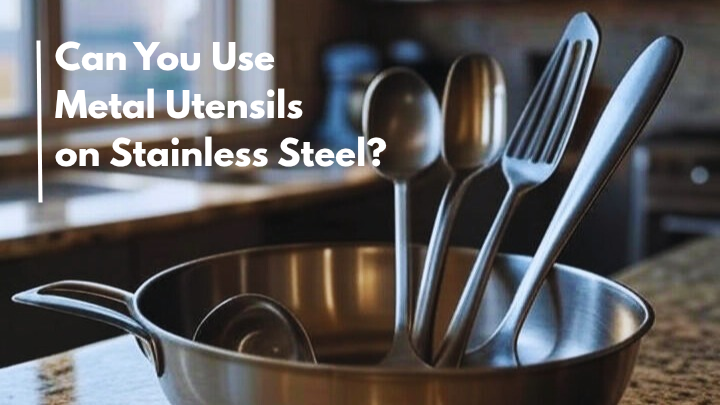
If you’re anything like me, you’ve had that moment, standing in front of your sizzling pan, metal spatula in hand, wondering, “Am I wrecking this thing?” I’ve questioned myself mid-cook more times than I can count. Which brings us to the real question: Can you use metal utensils on stainless steel?
Short answer? Yep, you can. Stainless steel is tougher than it looks. I always use metal utensils on stainless steel, but not on non-stick or coated pans. In the case of stainless steel, metal utensils might leave a few minor scratches over time, they won’t mess with how your pan cooks.
But there’s more to it than just a yes or no. If you’re curious about how it all works and protect your pans while still getting the job done, keep reading. You’re gonna want to know this stuff.
Disclosure: This post may contain affiliate links. If you buy through these links, I may earn a small commission at no extra cost to you. As an Amazon Associate, I earn from qualifying purchases.
Can You Use Metal Utensils on Stainless Steel Cookware?
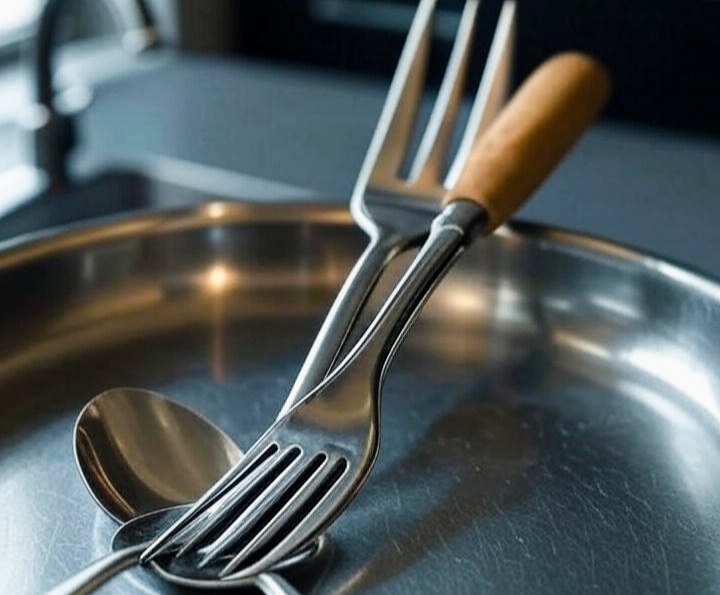
Yes, you can use metal utensils on stainless steel cookware, but with a little caution. Stainless steel is tough stuff. It’s known for its durability, resistance to high heat, and ability to take a bit of a beating. That said, while using metal utensils on stainless steel won’t ruin your pans, it can cause minor surface scratches.
But here’s the kicker—those tiny scratches? They’re mostly cosmetic and don’t really affect the performance of your cookware. So if you’re okay with your pan having a bit of a seasoned, well-loved look, go ahead and use that metal spoon or spatula.
However, never use metal utensils on non-sticky pans that have different coats. It will leave scratches on the surface, damaging the coat and overall functionality of the pan.
If you’re planning to buy a new sets of utensils for your stainless steel pans, read my guide on the best cooking utensils for stainless steel pans. The list includes other types of utensils too apart from the metal ones.
Pros and Cons of Using Metal Utensils on Stainless Steel
Pros:
- Durability: Metal utensils are strong and often better at deglazing and scraping off stubborn bits.
- Control: For tasks like searing or stir-frying, metal spatulas give you more precision and leverage.
- Heat Resistance: Unlike plastic or silicone, metal doesn’t melt or warp under high heat.
Cons:
- Surface Scratches: Over time, metal on metal will leave marks. These don’t impact cooking, but if aesthetics matter, it’s something to consider.
- Noise: Let’s be honest—metal scraping on metal can sound like nails on a chalkboard.
What Kind of Utensil Do You Use with Stainless Steel Pans or Pots?
Honestly, it comes down to personal preference. While metal utensils work just fine, many home cooks (including me) rotate between tools depending on the task.
If I’m flipping something delicate like eggs, I’ll go for a nylon or silicone spatula. For heavy-duty browning, I love the control of a good old metal turner.
You can also explore a solid stainless steel cooking utensils set. These usually include slotted spoons, ladles, tongs, and spatulas that are built to work great with stainless steel pans.
If you’re in the market, look for a stainless steel kitchen utensils set that’s dishwasher-safe and heat-resistant.
Alternative Utensil Options for Stainless Steel
If the thought of scratches drives you a little nuts, no worries—there are other options:
- Silicone Utensils: These are gentle on your cookware, non-stick, and super easy to clean. A high-quality stainless steel utensil set with silicone tips gives you the best of both worlds.
- Wooden Utensils: Wooden spoons and spatulas are gentle and eco-friendly, though they require more care and can stain over time.
- Nylon Utensils: Heat-resistant to a degree, but not ideal for high-temperature cooking.
I keep all three in my drawer because each has its moment. But when I need power and control? My stainless steel cooking utensils are the go-to.
How to Maintain Stainless Steel Cookware with Minor Scratches
So, you used a metal spatula. No big deal. Here’s how to keep your pans looking and performing great:
- Bar Keepers Friend is your friend – This stuff works wonders on stainless steel and can reduce the appearance of light scratches.
- Polish with a non-abrasive pad – Skip steel wool (unless you’re working on cast iron) and go for soft scrubbers.
- Boil and deglaze – After cooking, deglaze your pan with water or stock. It helps lift food bits and prevents buildup.
- Dry Immediately – Always towel-dry your pans after washing to keep them spot-free and shiny.
And if you’re hunting for the best cooking utensils for stainless steel pans, aim for high-quality sets that won’t easily bend or wear out—look for something durable, sleek, and heat-resistant.
Conclusion
So to wrap it up: Yes, you can use metal utensils on stainless steel pans and pots, and no, it won’t destroy them. Just expect some battle scars along the way. If you love your pans looking pristine, rotate between stainless steel utensils, silicone, and wooden tools depending on the job.
FAQs
Do you use metal, wooden or plastic utensils with your pans?
I use all three depending on the situation. Metal for power, silicone for gentle stirring, and wood when I want that quiet, smooth feel.
Do scratches affect the performance of stainless steel cookware?
Nope. They may not look great, but they don’t mess with cooking performance.
Is it safe to use steel wool on stainless steel?
For really tough stains, maybe. But regular cleaning? Use a softer scrubber or sponge. Steel wool can be a bit too aggressive.
Can you use metal on stainless steel?
Yes, you can. Just don’t go hacking at your pan with a knife.
How do I remove deep scratches from my stainless steel cookware?
Deep ones are tricky. Try a stainless steel cleaner like Bar Keepers Friend or a polish made for cookware. Sometimes they fade, sometimes they become part of the pan’s story.
What’s the best way to keep stainless steel looking shiny?
Clean it well after each use, polish it occasionally, and always dry it by hand. A little love goes a long way!