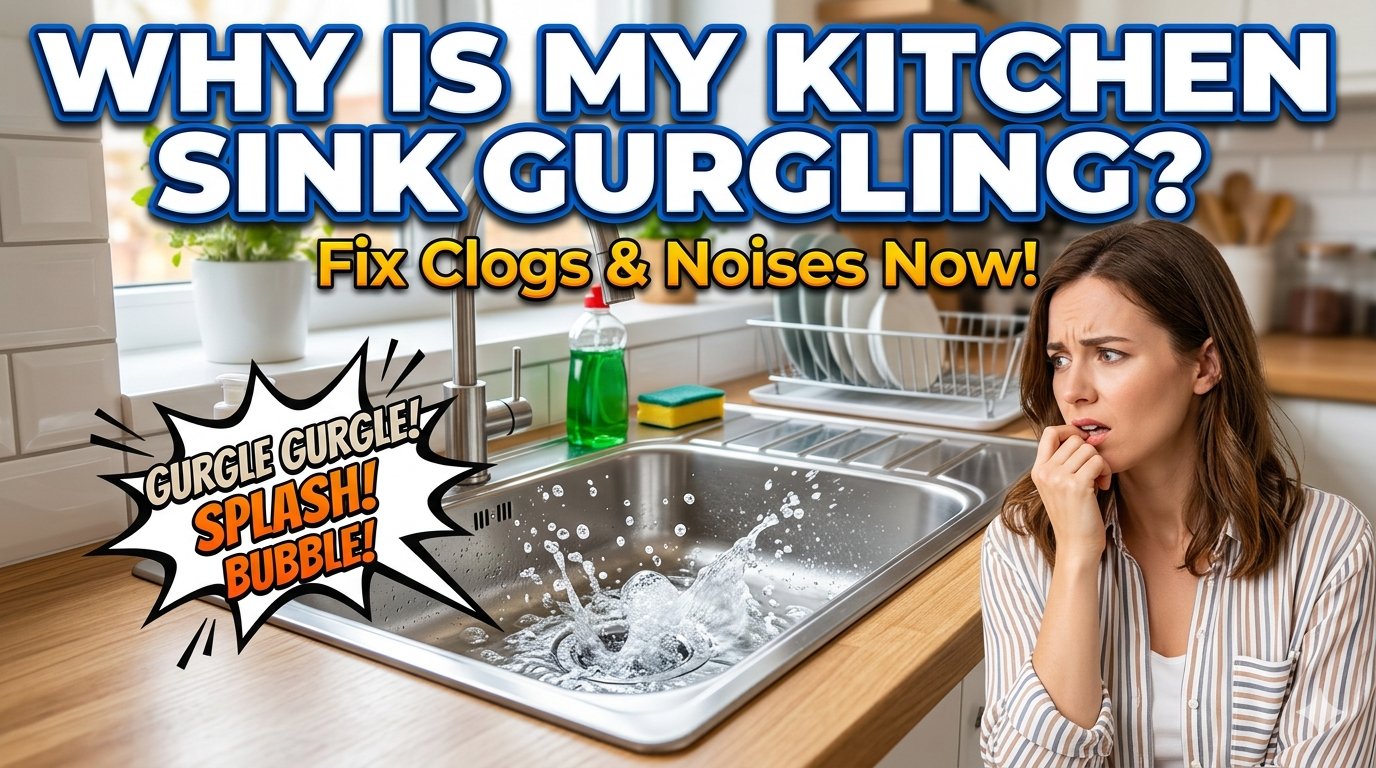
A gurgling kitchen sink is one of those annoying house problems that many homeowners experience. You run the faucet or dishwasher, and suddenly you hear that strange glug-glug sound coming from the drain.
It’s frustrating, but more importantly, that noise is a warning sign.
Your sink isn’t just making noise for no reason. A gurgle usually means air is trapped in your plumbing system, often because something is blocking or disrupting normal water flow.
In this guide, I’ll walk you through:
- What a gurgling sink actually means
- The most common causes behind the problem
- Simple DIY troubleshooting steps you can try at home
- And when it’s time to call a professional plumber
If you catch the problem early, you can often fix it quickly before it turns into a bigger plumbing issue.
Disclosure: This post may contain affiliate links. If you buy through these links, I may earn a small commission at no extra cost to you. As an Amazon Associate, I earn from qualifying purchases.
What Does It Mean When Your Kitchen Sink Gurgles?
When your kitchen sink gurgles, it usually means air is trapped inside the drain line and is trying to escape through the water in your sink.
Normally, water should flow smoothly down the drain while air moves through vent pipes in your plumbing system.
But when something interrupts that balance like a clog or blocked vent, air bubbles back through the water, creating the gurgling or bubbling sound.
In most homes, the problem is caused by:
- Partial drain clogs
- Grease buildup
- Blocked plumbing vent pipes
- Problems with the main sewer line
- Dishwasher drain issues
Let’s break down the most common cause first.
The Primary Culprit: How Clogs Cause Your Sink to Gurgle
Understanding Air Pressure and Water Flow in Your Drain
Your plumbing system works a lot like a straw.
When water flows down your sink drain, it pushes air through the pipes and vent system. But if something blocks the pipe, the air has nowhere to go.
Instead of flowing through the vent pipe, the trapped air pushes back through the sink drain, creating that familiar gurgling sound.
According to licensed plumber Mark Stevens,
“A gurgling sink is almost always a sign that air is trapped somewhere in the drain system. In most homes, that happens because of a partial clog or a blocked vent.”
Common Clog Materials in Kitchen Sinks
Kitchen sinks deal with a lot of waste that easily sticks to pipes.
The most common clog materials include:
- Grease and cooking oil: These cool inside the pipes and turn into sticky buildup.
- Food particles: Rice, pasta, and vegetable scraps can collect inside bends in the drain.
- Soap scum: Over time, soap residue can trap grease and debris.
- Coffee grounds: They clump together and stick to pipe walls.
Common Clog Locations in Kitchen Plumbing
Where the clog sits often determines how the gurgling behaves.
- P-Trap (under the sink): The curved pipe under your sink collects debris easily.
- Drain line inside the wall: Grease and food waste slowly build up here.
- Main sewer line: If the clog is deeper in the system, multiple fixtures may be affected.
Beyond the Blockage: Other Reasons for a Noisy Kitchen Sink
Clogs are common, but they’re not the only cause.
Several other plumbing issues can also lead to a gurgling kitchen sink.
Vent Pipe Problems: The Unsung Hero of Your Plumbing System
Your plumbing system includes vent pipes that extend through the roof.
Their job is to:
- Release sewer gases safely
- Maintain proper air pressure
- Allow drains to flow smoothly
If the vent pipe becomes blocked by:
- leaves
- bird nests
- debris
- snow buildup
The system can’t balance air pressure properly.
The result?
Water drains slowly and air bubbles back through the sink.
Yes, a clogged vent pipe can absolutely cause a kitchen sink to gurgle.
Proper venting is required under plumbing standards like the Uniform Plumbing Code (UPC) and International Plumbing Code (IPC) to ensure safe drainage and air pressure balance.
Main Sewer Line Issues
Sometimes the issue is bigger than your kitchen sink.
If the main sewer line is clogged or damaged, you may notice:
- Gurgling from multiple drains
- Slow draining sinks or tubs
- Toilets bubbling after flushing
- Sewage smells in drains
Common causes include:
- Tree root intrusion
- Pipe collapse
- Severe grease buildup
When the main sewer line is involved, professional help is usually required.
Dishwasher Drain Connection Problems
If your sink gurgles when the dishwasher runs, the dishwasher drain system may be the cause.
Possible issues include:
- Missing or incorrect high loop installation
- A clogged dishwasher air gap
- Shared drain line blockage
The dishwasher pushes a large amount of water into the drain quickly. If the pipe can’t handle the flow, it forces air bubbles back through the sink drain.
Homeowner’s Detective Work: How to Diagnose Your Gurgling Sink
Before calling a plumber, there are a few simple checks you can do.
These steps often reveal the source of the problem.
1. Observe When the Gurgle Happens
Pay attention to when the sound occurs.
For example:
- When you run the faucet
- When the dishwasher drains
- When another sink or toilet is used
This helps narrow down where the problem is in the plumbing system.
2. Check Other Fixtures in Your Home
Turn on other plumbing fixtures and listen.
Look for:
- Slow draining tubs
- Toilets bubbling
- Other sinks gurgling
If multiple fixtures are affected, the problem may be in the main drain or vent system.
3. Inspect the P-Trap Under the Sink
Take a look under the sink.
Check for:
- Leaks
- Food buildup
- Bad smells
- Loose connections
If the P-trap is clogged, cleaning it may solve the problem quickly.
DIY Solutions for a Simple Gurgle
If the issue is a small clog, you can often fix it yourself.
Start with the simplest solutions first.
1. Use a Plunger (Correct Technique)
A plunger can clear many kitchen sink clogs.
Steps:
- Fill the sink with a few inches of water.
- Cover the drain with a plunger.
- Seal the overflow opening with a cloth.
- Push down firmly and pump 10–15 times.
- Pull the plunger away quickly.
If the clog loosens, water should drain normally.
2. Try Baking Soda and Vinegar
This eco-friendly method can break up light grease buildup.
Steps:
- Pour ½ cup baking soda down the drain.
- Add 1 cup vinegar.
- Let it fizz for 15 minutes.
- Flush with hot water.
This works best for minor buildup, not major clogs.
3. Clean the P-Trap
If plunging doesn’t work, cleaning the P-trap often solves the problem.
You’ll need:
- Bucket
- Adjustable wrench
- Rubber gloves
Steps:
- Place the bucket under the P-trap.
- Loosen the slip nuts.
- Remove the trap.
- Clean out debris.
- Reassemble and tighten.
4. Use a Basic Drain Snake
If the clog is deeper in the pipe, a small hand auger can help.
Steps:
- Insert the snake into the drain.
- Turn the handle slowly.
- Pull out debris.
- Run hot water to flush the pipe.
Safety Warning
Avoid chemical drain cleaners whenever possible.
They can:
- damage pipes
- cause dangerous splashes
- create toxic fumes
Plumber Daniel Ruiz warns:
“Chemical cleaners may seem like a quick fix, but they often make plumbing problems worse. Mechanical cleaning is always safer.”
When to Call a Professional Plumber
Some plumbing problems go beyond DIY fixes.
You should call a professional if you notice:
Persistent gurgling
If the noise keeps returning, a deeper clog may exist.
Multiple fixtures affected
This often indicates a main sewer line problem.
Sewage smells
This could signal a venting issue or sewer backup.
Water backing up into the sink
This requires immediate professional attention.
Is a Gurgling Kitchen Sink an Emergency?
Usually, no.
Most gurgling sinks are caused by minor clogs or vent issues.
However, it becomes urgent if you notice:
- sewage backing up
- multiple drains failing
- strong sewer odors
Those signs could mean a serious sewer line problem.
What’s the Difference Between a Gurgling and Bubbling Sink?
Both noises indicate air problems in the drain.
- Gurgling: A deep “glug” sound caused by air escaping through water.
- Bubbling: Small air bubbles appearing in the sink water.
Both usually point to restricted airflow in the plumbing system.
How to Stop Your Kitchen Sink From Gurgling
To stop the noise, you need to fix the underlying issue.
Most solutions involve:
- removing clogs
- cleaning the P-trap
- clearing the vent system
- repairing drain connections
Once normal water and air flow return, the gurgling will disappear.
Keeping Your Kitchen Sink Gurgle-Free
Preventing clogs is much easier than fixing them.
Follow these simple habits.
Flush the drain regularly
Run hot water for 30 seconds after washing dishes.
Never pour grease down the sink
Let the grease cool and throw it in the trash.
Use a drain strainer
It catches food particles before they enter the pipes.
Avoid putting these in the drain
- coffee grounds
- rice
- pasta
- fibrous vegetables
Clean the drain monthly
A baking soda and hot water flush works well.
FAQs
Why does my kitchen sink gurgle when I run water?
It usually means air is trapped in the drain, often due to a partial clog or vent issue.
Is a gurgling kitchen sink always a sign of a clog?
No. While clogs are the most common cause, blocked vent pipes or sewer line problems can also create gurgling.
Can I fix a gurgling kitchen sink myself?
Yes. Many homeowners fix it by plunging the sink, cleaning the P-trap, or using a drain snake.
How often should I clean my kitchen sink drain to prevent gurgling?
A light cleaning every 1–2 months helps prevent buildup.
What’s the best way to prevent kitchen sink clogs?
Avoid grease, use a sink strainer, and flush the drain with hot water regularly.